Sunday, October 12, 2014

Centrifugal, Douglas S. Jones

Centrifugal

BY DOUGLAS S. JONES
The spider living in the bike seat has finally spun
its own spokes through the wheels.
I have seen it crawl upside down, armored
black and jigging back to the hollow frame,
have felt the stickiness break
as the tire pulls free the stitches of last night's sewing.
We've ridden this bike together for a week now,
two legs in gyre by daylight, and at night,
the eight converting gears into looms, handle bars
into sails. This is how it is to be part of a cycle—
to be always in motion, and to be always
woven to something else.

Poem copyright ©2011 by Douglas S. Jones, whose most recent book of poems is the chapbook No Turning East, Pudding House Press, 2011. Poem reprinted from The Pinch,Vol. 31, no. 2, 2011

When I am Asked, Lisel Mueller

 When I Am Asked

BY LISEL MUELLER
When I am asked   
how I began writing poems,   
I talk about the indifference of nature.   

It was soon after my mother died,   
a brilliant June day,   
everything blooming.   

I sat on a gray stone bench   
in a lovingly planted garden,   
but the day lilies were as deaf   
as the ears of drunken sleepers   
and the roses curved inward.   
Nothing was black or broken   
and not a leaf fell   
and the sun blared endless commercials   
for summer holidays.   

I sat on a gray stone bench   
ringed with the ingenue faces   
of pink and white impatiens   
and placed my grief   
in the mouth of language,   
the only thing that would grieve with me.

Lisel Mueller, "When I am Asked" from Alive Together: New and Selected Poems. Copyright © 1996 by Lisel Mueller.  Reprinted by permission of Louisiana State University Press.

Source: Poetry (October/November 1987)

Friday, October 10, 2014

To The Happy Few, W.S. Merwin

To the Happy Few

Do you know who you are

O you forever listed
under some other heading
when you are listed at all

you whose addresses
when you have them
are never sold except
for another reason
something else that is
supposed to identify you

who carry no card
stating that you are—
what would it say you were
to someone turning it over
looking perhaps for
a date or for
anything to go by

you with no secret handshake
no proof of membership
no way to prove such a thing
even to yourselves

you without a word
of explanation
and only yourselves
as evidence

"To the Happy Few" by W.S. Merwin, from Collected Poems: 1996-2011. © Library of America, 2013

Tuesday, October 7, 2014

Negative Space, Ron Koertge

Negative Space


My dad taught me to pack: lay out everything. Put back half. Roll things
that roll. Wrinkle-prone things on top of cotton things. Then pants, waist-
to-hem. Nooks and crannies for socks. Belts around the sides like snakes.
Plastic over that. Add shoes. Wear heavy stuff on the plane.
   We started when I was little. I'd roll up socks. Then he'd pretend to put me
in the suitcase, and we'd laugh. Some guys bond with their dads shooting
hoops or talking about Chevrolets. We did it over luggage.
   By the time I was twelve, if he was busy, I'd pack for him. Mom tried
but didn't have the knack. He'd get somewhere, open his suitcase and text
me—"Perfect." That one word from him meant a lot.
   The funeral was terrible—him laid out in that big carton and me crying
and thinking, Look at all that wasted space.


"Negative Space" by Ron Koertge, from Sex World. © Red Hen Press, 2014

Sunday, October 5, 2014

Neighbors in October, David Baker


Neighbors in October

BY DAVID BAKER
All afternoon his tractor pulls a flat wagon
with bales to the barn, then back to the waiting
chopped field. It trails a feather of smoke.
Down the block we bend with the season:
shoes to polish for a big game,
storm windows to batten or patch.
And how like a field is the whole sky now
that the maples have shed their leaves, too.
It makes us believers—stationed in groups,
leaning on rakes, looking into space. We rub blisters
over billows of leaf smoke. Or stand alone,
bagging gold for the cold days to come.


Source: The Truth about Small Towns (University of Arkansas Press, 1998)

Friday, October 3, 2014

Sometimes A Wild God, Tom Hirons

Sometimes A Wild God
Tom Hirons


Sometimes a wild god comes to the table.
He is awkward and does not know the ways
Of porcelain, of fork and mustard and silver.
His voice makes vinegar from wine.
When the wild god arrives at the door,
You will probably fear him.
He reminds you of something dark
That you might have dreamt,
Or the secret you do not wish to be shared.
He will not ring the doorbell;
Instead he scrapes with his fingers
Leaving blood on the paintwork,
Though primroses grow
In circles round his feet.
You do not want to let him in.
You are very busy.
It is late, or early, and besides…
You cannot look at him straight
Because he makes you want to cry.
The dog barks.
The wild god smiles,
Holds out his hand.
The dog licks his wounds
And leads him inside.
The wild god stands in your kitchen.
Ivy is taking over your sideboard;
Mistletoe has moved into the lampshades
And wrens have begun to sing
An old song in the mouth of your kettle.
‘I haven’t much,’ you say
And give him the worst of your food.
He sits at the table, bleeding.
He coughs up foxes.
There are otters in his eyes.
When your wife calls down,
You close the door and
Tell her it’s fine.
You will not let her see
The strange guest at your table.
The wild god asks for whiskey
And you pour a glass for him,
Then a glass for yourself.
Three snakes are beginning to nest
In your voicebox. You cough.
Oh, limitless space.
Oh, eternal mystery.
Oh, endless cycles of death and birth.
Oh, miracle of life.
Oh, the wondrous dance of it all.
You cough again,
Expectorate the snakes and
Water down the whiskey,
Wondering how you got so old
And where your passion went.
The wild god reaches into a bag
Made of moles and nightingale-skin.
He pulls out a two-reeded pipe,
Raises an eyebrow
And all the birds begin to sing.
The fox leaps into your eyes.
Otters rush from the darkness.
The snakes pour through your body.
Your dog howls and upstairs
Your wife both exults and weeps at once.
The wild god dances with your dog.
You dance with the sparrows.
A white stag pulls up a stool
And bellows hymns to enchantments.
A pelican leaps from chair to chair.
In the distance, warriors pour from their tombs.
Ancient gold grows like grass in the fields.
Everyone dreams the words to long-forgotten songs.
The hills echo and the grey stones ring
With laughter and madness and pain.
In the middle of the dance,
The house takes off from the ground.
Clouds climb through the windows;
Lightning pounds its fists on the table.
The moon leans in through the window.
The wild god points to your side.
You are bleeding heavily.
You have been bleeding for a long time,
Possibly since you were born.
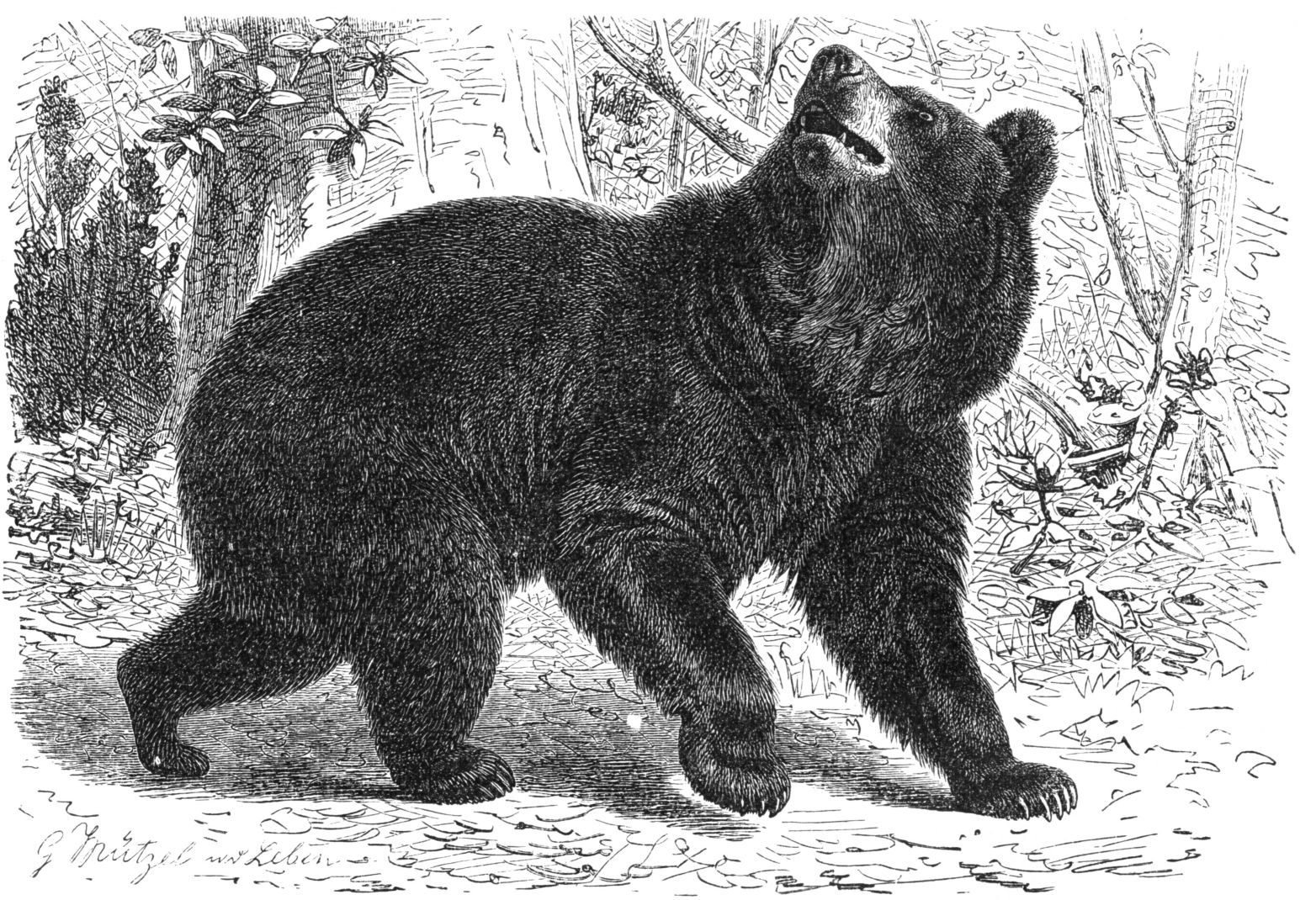
There is a bear in the wound.
‘Why did you leave me to die?’
Asks the wild god and you say:
‘I was busy surviving.
The shops were all closed;
I didn’t know how. I’m sorry.’
Listen to them:
The fox in your neck and
The snakes in your arms and
The wren and the sparrow and the deer…
The great un-nameable beasts
In your liver and your kidneys and your heart…
There is a symphony of howling.
A cacophony of dissent.
The wild god nods his head and
You wake on the floor holding a knife,
A bottle and a handful of black fur.
Your dog is asleep on the table.
Your wife is stirring, far above.
Your cheeks are wet with tears;
Your mouth aches from laughter or shouting.
A black bear is sitting by the fire.
Sometimes a wild god comes to the table.
He is awkward and does not know the ways
Of porcelain, of fork and mustard and silver.
His voice makes vinegar from wine
And brings the dead to life.

Go Deeper Than Love, D.H. Lawrence

Go Deeper than Love

Go deeper than love, for the soul has greater depths,
love is like the grass, but the heart is deep wild rock
molten, yet dense and permanent.
Go down to your deep old heart, and lose sight of yourself.
And lose sight of me, the me whom you turbulently loved.
Let us lose sight of ourselves, and break the mirrors.
For the fierce curve of our lives is moving again to the depths
out of sight, in the deep living heart.
 
~ D.H. Lawrence ~
 
(excerpt from Know Thyself, Know Thyself More Deeply)